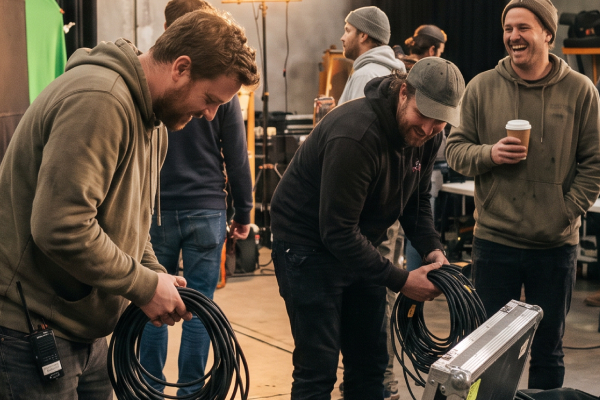
The last shot is in the can. You have interviews, scenes, and maybe a few moments nobody planned. You don’t yet have a film.
The video post-production process is where that material becomes a story people can follow and a set of files they can actually use. Editing is the center of it, but sound, color, graphics, review, and delivery all shape the result. If you’re the client, knowing what each stage is for helps you give useful feedback at the right time.
First, find the film in the footage
An editor starts by organizing and watching what was captured. A script or shot list provides direction, but the strongest line in an interview may not be the one everyone expected. The best visual moment may change where a scene begins. The early edit tests how the material works together, rather than simply putting shots in the order they were filmed.
Imagine a brand film about a team that repairs public spaces. The planned opening is an executive explaining the mission. In the footage, a crew member notices a damaged bench and gets to work before saying a word. Starting with that action might give viewers a reason to care before they hear the explanation. That’s a hypothetical editorial choice, not an account of a Coolfire project. The point is to judge the opening by what it lets the audience see and understand.
A rough cut makes the story discussable. It may still have temporary music, unfinished graphics, uneven color, or a line that needs tightening. Review it for the big questions first: Can a new viewer tell what’s happening? Does the piece spend time on the right person or idea? Is there a claim that needs proof or approval? A polished transition can’t solve a story that has the wrong center.
Give feedback that fits the stage
“It doesn’t feel right” is a useful signal, but the team needs to know where the feeling starts. Is the opening slow? Is an interview answer unclear? Does the ending ask the viewer to do something the rest of the film hasn’t earned? Point to the moment and explain what you hoped a viewer would take from it.
Collect comments from the people who need a say before sending them to the edit team. A brand lead may be judging tone; a subject expert may be checking accuracy; legal may need to clear a specific claim. Those are different kinds of feedback. If two reviewers disagree about the story, resolve the decision on your side before asking an editor to make both versions at once.
Three questions can keep a rough-cut review focused:
- Story: What should a viewer understand or feel by the end, and where does the cut lose that thread?
- Accuracy: Which names, images, statements, or product details need checking?
- Use: Will this cut work in the place it is meant to appear, or is a different opening or ending needed?
Once the story and timing are agreed, the team can move into detailed finishing with a steadier target. That doesn’t mean every project follows an identical sequence. Graphics, visual effects, music, and sound may be developed while the edit is still changing. It does mean a major structural change late in the process can affect several pieces of work, so it’s worth making the story decision deliberately.
Make the picture and sound work together
Finishing is more than a final coat of shine. A title can tell viewers who is speaking. Motion graphics can make a process legible when footage alone won’t. Color work can help shots from different times or places sit together and give the piece a consistent visual feel. Sound editing can make speech clearer, place a moment in its environment, or create a pause that an image alone can’t carry. Music can support the pace or compete with what someone is saying.
Which of those tools belongs in the film depends on the material and its job. The repair film might need a simple location title and the sound of work in progress; it may not need animation. Another piece may need a visual explanation that could never be captured on location. Asking “What does this element help the viewer understand?” is more useful than asking for every available effect.
Coolfire Studios lists editorial, motion graphics, animation, color grading, and audio services among its commercial capabilities. Its portfolio also shows why credits matter: for Rebel Spirit, the page credits Coolfire with post-production and lists separate audio/music, color, and motion-graphics roles. That describes the published credit, not what the team did in any unseen edit session. It also shows how much distinct craft can sit behind the word “post.”
When you review a later cut, pay attention to how the pieces work as one experience. Can you hear every important word? Does a title stay long enough to read? Is a graphic explaining something, or drawing your eye away from it? If the story will be watched with captions, review the text and timing as part of the actual viewing experience.
Check the versions before calling it finished
The final film is often more than one file. A campaign may need a main cut, a shorter version, a different orientation, captions, or alternate end information. Each version needs a purpose and a check. A short edit may need its own opening to make sense without the main film; a vertical version may need reframing so the subject stays visible.
Before delivery, compare the approved content with the actual files. Are the names, claims, logos, and calls to action correct in every version? Does the sound play as expected? Are captions accurate? Are the requested formats and destinations clear? These checks are plain work, but a missed detail here can follow a film into the world.
Decide who gives final sign-off and what they are approving: the story, the claims, and the set of deliverables. Then keep a clear record of which version is final. “The latest cut” is a fragile way to identify a file when several people and placements are involved.
Post-production turns footage into a finished message through a series of choices. The most useful thing a client can bring to those choices is clarity about the audience, the story, and where the work will live.
Have a video project taking shape? Talk with Coolfire about the story and the finished pieces you need.